The trading markets are closed on Friday evening, but a global conflict begins Saturday morning.
Israel and the United States have conducted coordinated strikes on Iran’s military, missile, and nuclear infrastructure.
The operation has been framed by President Donald Trump as the removal of “imminent threat,” but the president’s own statements in public and his subsequent comments reveal that there is a more complex plan.
These videos reveal a hybrid campaign that combines military degrading, nuclear rollback and calls for open regime change.
The economic consequences are serious and they will determine much of the discussion about where to invest in the coming week.
What brought us here?
This current conflict is a culmination of decades-long hostility. A distrustful framework was created by the 1953 coup, 1979 revolution, hostage crisis and nuclear dispute which led to JCPOA in 2015 and the US withdrawal from it in 2018.
Iran’s uranium-enrichment has increased to a level that the International Atomic Energy Agency considers close to weapon grade. Meanwhile, Washington has reinstituted heavy sanctions as part of its “maximum press” policy.
The tensions increased in 2025 after the US attacked Iranian nuclear sites. This was followed by a short ceasefire.
There were explosions reported on Saturday 28th February in Tehran, Isfahan, and Qom.
Iran has responded to the US and Israeli bases with drone and missile strikes.
Israeli airspace was closed, and an emergency state of affairs declared.
The President Donald Trump stated that the goal was to eliminate “imminent threat” and encouraged Iranians to rebel against their government.
He went beyond a narrowly military goal. The language blended missile destruction, nuclear disarmament and regime change.
This mix indicates to investors that there is uncertainty about the future. It is this uncertainty which drives investors to reevaluate their investment decisions.
What do the US want?
In an eight-minute address, Trump listed several goals.
He talked about dismantling Iran’s nuclear program, eliminating missile production, neutralising the naval capability and stopping support for regional proxy states.
The Iranian leader also called on the Iranians to seize control of their own country.
Most of these goals would only be permanent if there was no regime change. Rebuilding nuclear facilities is possible. Missiles are reassembleable.
Inspectors may be dismissed. Although air power has been used to overthrow governments, it rarely causes damage.
The US has leverage because Iran is in an economically weak position when it enters the confrontation.
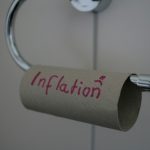
Since 2007, the GDP per capita stagnates. In recent years, the rial’s value has dropped from 36,000 dollars per rial in 2016, to less than 1.6 million. The inflation rate has been hovering around 40%.
Official data shows that about one third of the country’s population live below the poverty level. The crackdown on protests that took place in 2025 was severe.
The economic fragility can increase the political pressure on a regime, but it doesn’t eliminate its ability to respond.
When the markets open Monday, investors will need to consider a balance when choosing where they want to invest.
Oil is the real battleground
The Strait of Hormuz is the focus of the market, not Tehran.
In 2025, the Strait will be home to approximately 31% of all seaborne crude oil flows.
A fifth of global oil supplies pass through the narrow channel that connects Oman with Iran.
Investors refer to this story as one of a “chokepoint” rather than an account of production. Venezuela produces around 800,000 barrels per day. Iran is located next to an oil corridor which moves ten times more.
A limited conflict, say economists, could push Brent up to $80 per barrel. Price could reach $100 if a longer conflict disrupts the supply.
An Iranian attempt to directly block Hormuz could create an even greater shock. Before the strike, crude oil had already risen by more than 2 percent on news that discussions in Switzerland failed to progress.
OPEC+ will meet this weekend, and could raise the output quotas by a higher amount than 137,000 barrels per dya.
A larger supply of goods can help to ease the pain, but it won’t replace major chokepoints overnight.
What is likely to happen in the markets?
Investors are expecting a traditional risk-off pattern. Oil higher.
At the opening, stocks are down by 1 to 2 percent. US Treasury yields have fallen by 5 to 10 basis points. Dollar and gold both are higher. The Japanese yen is bid.
When Israel attacked Iranian nuclear sites in June 2025 the equities fell and recovered when it was clear that Hormuz would remain open.
Several managers have noted that the positioning of their teams has become defensive.
In recent weeks, oil prices have firmed and the demand for Treasury bonds has risen. This may be enough to cushion the initial move.
It will depend on the duration of this campaign whether it remains as a brief shock or turns into a wider repricing.
Once the initial volatility has subsided, it will be clearer where you should invest.
Israel’s economy is a good recent example. The GDP dropped by 1.1% in the second half of last year during the 12-day conflict.
The longer the campaign, the more it will affect output. This is due to lower investment and activity levels as well as higher security costs.
Asian markets are more susceptible than other markets.
Many economies of the region rely heavily on energy imports and reliable shipping routes.
The impact of a sustained rise in the price of oil on trade and inflation would be direct.
What will happen if the regime falls?
Investors rarely take into account a long-term scenario at the beginning of a conflict.
According to a study conducted by the Vienna Institute for International Economic Studies in February 2026, lifting EU sanctions could increase Iran’s GDP real by as much as 82% over the course of time.
The GDP of Germany would increase by about 0.32 percent and that of the EU by 0.33 per cent through increased exports and reduced energy costs.
If Iran could catch up in productivity to countries like Turkey and South Korea, its GDP would increase by over 200 percent.
According to the same study, restoring Iranian oil output could lower global oil prices between 6-15% in time.
Gas prices will continue to fall in Europe as more LNG is imported.
This upside is only possible with a smooth transition to global markets and reintegration.
Unorderly collapse will have the opposite impact, causing migration to increase and disrupt supply chains.
Traders are more interested in satellite images and tanker traffic than public speeches.
Hormuz is the closest path to follow.
Tehran’s system of politics is the longer-term path. Both must be priced by investors.
As new information unfolds, this post US and Israel strike on Iran send oil price higher may be updated.
This site is for entertainment only. Click here to read more