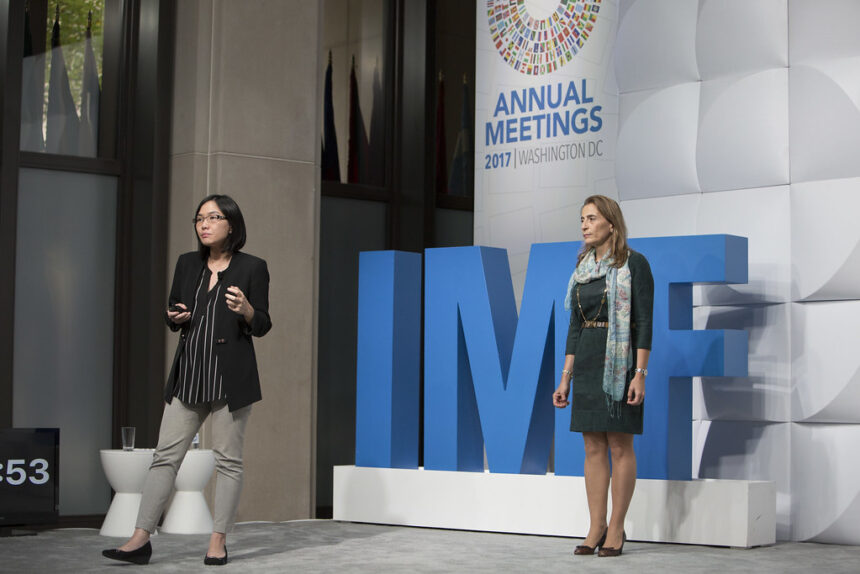
Christopher Waller, the Federal Reserve governor stated on Friday that tariffs are not expected to significantly increase inflation.
He believes that policymakers need to consider cutting interest rates even as early as the next month.
The central banker told CNBC that he, along with his colleagues, should start easing the monetary policies, noting the fact that the inflation does not pose a serious threat to the economic system at the moment, and is unlikely to do so in the future.
Probability of rate cuts in July
Waller stated in an interview that “I believe we are in a position where we can do this as soon as July.”
I would say that, regardless of whether or not the committee agrees.
The Federal Open Market Committee chose to hold its interest rate two days earlier, making it the fourth time in a row that the Federal Open Market Committee has held the key interest rates since December.
Waller was appointed as governor by US President Donald Trump during his first tenure in office.
Trump has repeatedly pressed the Federal Reserve for a decrease in interest rates.
This is a move to reduce the costs of borrowing associated with the national debt which stands at 36 trillion dollars.
The ongoing pressure is part of a wider economic strategy to stimulate growth and reduce the burden placed on the government.
Concern about the labour market
Waller thinks the Fed needs to implement reductions in order to prevent a possible deceleration of the labor market.
He said: “If you are starting to be concerned about [the] downside risks of the labor market, act now. Don’t delay.”
Why wait for a real crash to start cutting interest rates?
It’s my opinion that we shouldn’t wait until the economy is in a downward spiral before cutting policy rates.
Waller’s comments led to gains in the stock futures market.
Waller’s position is unlikely to be well-supported.
The FOMC decided, with Waller’s vote at this week’s meeting, to keep the federal funds benchmark rate in its range of 4.25-4.5%.
The “dotplot” shows that policymakers have a lack of confidence in the direction interest rates will take.
The dispersion in views, while the median forecast suggests that there will be two rate reductions this year is noteworthy.
Seven out of 19 participants in the meeting expect rates to remain the same, while two predict only a single cut. The remaining 10 anticipate two or three cuts.
Fed is expected to adopt a cautious approach
In remarks made Wednesday, before the Fed’s meeting, Trump referred to Fed Chairman Jerome Powell as “stupid”, for refusing to push for cuts and advocating significant changes.
The benchmark rate, he believes, should be 2 percentage points less than the current rate of 4.33%. He even suggests that it should be 2.5 points lower.
Waller, who is a possible successor to Powell – whose tenure as chairman ends in May 2026 – urged caution from the committee. Trump, meanwhile, has hinted at an impending announcement about his intentions.
You’d like to begin slowly and then bring them down to ensure that you don’t get any big surprises. Start the process. Waller stated that this is the most important thing.
I don’t believe we should wait any longer because, even if tariffs are implemented later, their impact will still be the same. The effect should only be temporary and shouldn’t cause inflation.
Apprehensions
Some officials are hesitant to make cuts. They prefer to wait and see what the effects will be on the inflation rate, labor market, or overall economic growth.
We’ve been waiting for six months because we thought there would be a major shock in inflation due to tariffs. It hasn’t happened. Waller stated, “We follow the data.”
Since a year, I have argued that the central banks need to be monitoring this.
Powell said at his news conference following the Fed’s meeting on Wednesday that it can continue to wait and see as long as the job market is strong.
The latest inflation data shows minimal pass through as businesses deplete their inventory before the announcement of tariffs, amid concerns about slowed consumer demand and diminished pricing power.
The CME Group’s FedWatch measures indicate that the market prices for futures suggest that there is almost no chance of a cut in rates at the meeting on July 29-30. The next rate change is expected in September.
This article Fed Governor Waller calls for a July rate reduction amid rising tariffs and labor market concerns appeared first on the ICD