Airbnb CEO Brian Chesky has a different approach to success in an age where “grindset”, characterized by early morning wakeups and ice baths as well as unwavering compliance with corporate standards, is widely accepted.
He is not only tweaking his playbook, but he has rewritten significant sections of it. His leadership style prioritizes the personal wellbeing alongside corporate success.
Chesky, in a recent interview with The Wall Street Journal, advised: “Don’t be sorry for the way you run your business.”
This philosophy is reflected in the fact that the CEO of this $84.8 billion company, a short-term rentals giant, embraces late-night work and reduces the traditional, but often monotonous, duties for executives.
Early starts and email exile are over
Email has become one of Chesky’s most important departures from corporate culture.
He confessed that he hated emailing the most about his job before the pandemic.
Email hasn’t made the same comeback as in other parts of business, where there is a return to office culture from before 2019. This includes five-day weeks, office team building events and informal office conversation.
Now he rarely touches them as he finds them to be a major annoyance.
The WSJ reported that the Airbnb CEO prefers to communicate in a more immediate and direct manner while working, and favors texts and calls.
Chesky isn’t just averse to office traditions. He has also abandoned the dreaded meeting at 9 am.
Chesky, a night-owl, who is most productive in the evenings, has set a meeting start time of 10 am, not earlier.
Chesky said, “When you are CEO, you can choose when to hold the first meeting for the day.”
Chesky’s 5-to-9 productivity after his 9 to 5
Airbnb’s 43-year old co-founder does not subscribe to “early birds get the worm”.
He is most energetic in the evenings, especially after his exercise routine which usually ends around 9:30 pm.
He is most productive after 10 pm, and often works until around 2:30 am.
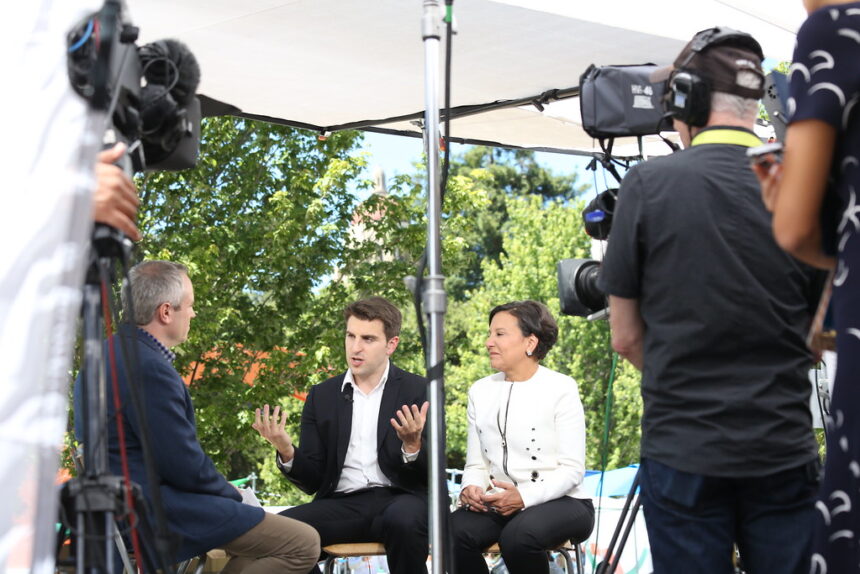
Picture: Airbnb CEO Brian Chesky. (Source: LinkedIn).
Chesky said candidly, “If I were to have a girlfriend that’s probably what would happen.” But I don’t have a girlfriend, so I will enjoy this.
The late bedtime and late rise schedule dictates that he will start his official work day later.
Chesky’s preference isn’t unique. A growing number of leaders who are high achievers reject the 5-a.m. group and customize their sleeping patterns to suit their busy careers.
Will.i.am is a musician and an entrepreneur who manages his technology venture in the normal business hours, but then returns to his creative endeavors until nine o’clock at night.
Will.i.am, a Fortune contributor said: “Work-life isn’t for architects who are bringing visions to life.”
These words are not compatible with the mentality of materializers.
Chesky’s unconventional method, which may surprise some people in the technology world, inspires others.
Whitney Wolfe Herd is the founder and former CEO at Bumble. She told The Wall Street Journal that Chesky “always said to me being a CEO in a publicly traded company doesn’t need to be miserable. I thought he sounded crazy.”
Wolfe Herd was more confident in her role when she returned to Bumble for this year.
She said, “He taught me to become a CEO once again.”
The trend towards customized leadership styles has gained traction. Nvidia’s CEO Jensen Huang, the man who runs a chip company worth $2.8 trillion, has discarded traditional corporate hierarchies.
His leadership team has a large group discussion instead of one-onone meetings to encourage open communication and information exchange.
Our company is designed to be agile in this way. Information should flow as fast as possible. Huang said last year that people should be empowered by their abilities, and not just what they know.
Jason Buechel, Whole Foods’ CEO, actively combats this culture of executive always-on by taking advantage of his paid vacation time.
The importance of relaxation and rest is stressed by him, claiming that a lack of earned holidays can have negative effects on mental health.
Buechel told Fortune recently: “I give PTO a high priority.” Buechel told Fortune, “I use my entire PTO allocation every year.”
The examples above illustrate a trend that is growing among executives. They are consciously trying to define success not according to a set of rigid rules but based on what works best for themselves and their organization.
The post Airbnb’s Chesky: Why CEOs do not need to be “miserable” may change as new information becomes available.
This site is for entertainment only. Click here to read more