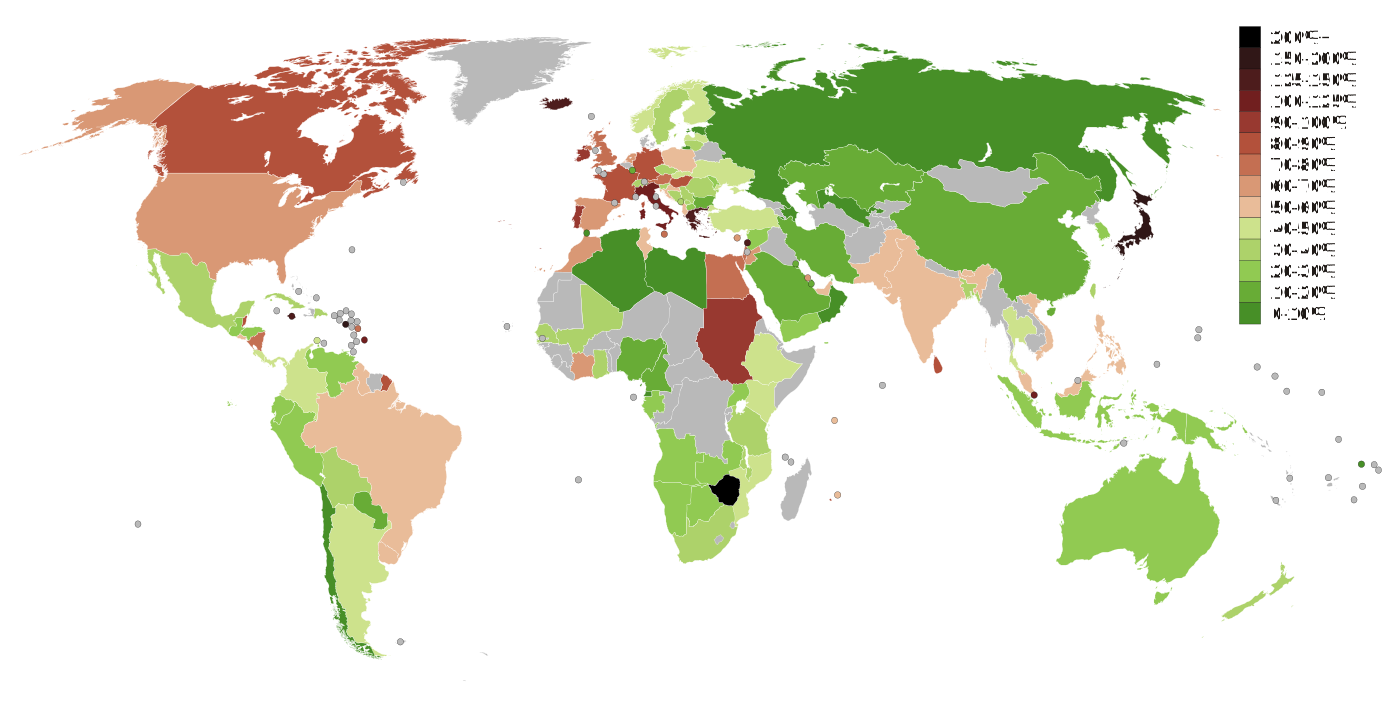
Brazilian Central Bank figures, released Monday by the central bank of Brazil, show that gross public debt increased slightly to 76.1% of GDP in May from 76.0% in April.
This modest increase highlights the continued pressure on the public finances, despite high interest rates and a growing debt load.
The central bank said that the main reason for the increase in debt during the month was interest payments. This is despite the fact that the primary fiscal balance of the government came out “better than expected” by the market.
Rising interest costs drive debt growth
Latin America’s largest economy, which is based in Brazil, paid nominal interest of 92.145 billion reals ($16.82billion) in May. This represents a rise by 23.9% over the same period last year.
This increase is a result of both the high interest rates and growing public debt.
In recent years, the central bank has continued its monetary tightening campaigns. This is accelerating interest rates. In order to control inflation, the Selic benchmark rate was increased by 25 basis point this month.
The total rate increase since September is now 450 basis points.
Primary deficit narrower than anticipated
Even with an increasingly expensive debt burden, Brazil ended up with a smaller-than-expected primary budget deficit, with analysts surprised by the performance.
The primary deficit for the public sector in May was 33.74 billion reais. This is much lower than the forecasted 42.7 billion reais by a Reuters survey of economists.
The primary deficit is an indicator that shows the financial health of the budget.
The smaller the gap, the better. However, such improvements were not enough to counteract all of interest costs.
Twelve-month figures reveal structural imbalances
The public sector, on a rolling 12 month basis, had a small primary surplus of only 0.2%. Interest payments totaled 7.77% during this time, which brings the nominal deficit up to 7.58%.
The numbers show the growing structural gap between Brazil’s debt and revenue.
The government maintained its primary surplus over the last year. However, high interest rates have resulted in an ongoing nominal deficit as well as a rising debt to GDP ratio.
Inflation and rate are key to the fiscal outlook
The new data reveal the fiscal challenges Brazil is facing in an era of tightening policy.
The cost of servicing the public debt is increasing, while interest rates are at historic highs to combat inflation.
The public debt is still susceptible to the future decisions made on inflation control, as the monetary policy continues in its restrictive mode and benchmark rates are at an all-time high.
According to May’s data, the goal of the government of reducing primary deficits was not enough to counter this trend. This is due to higher interest rates, which discourages progress in stabilising the debt dynamics of the country.
The post Brazil’s debt reaches 76.1% GDP in May, as interest rates surge may be updated as new information becomes available